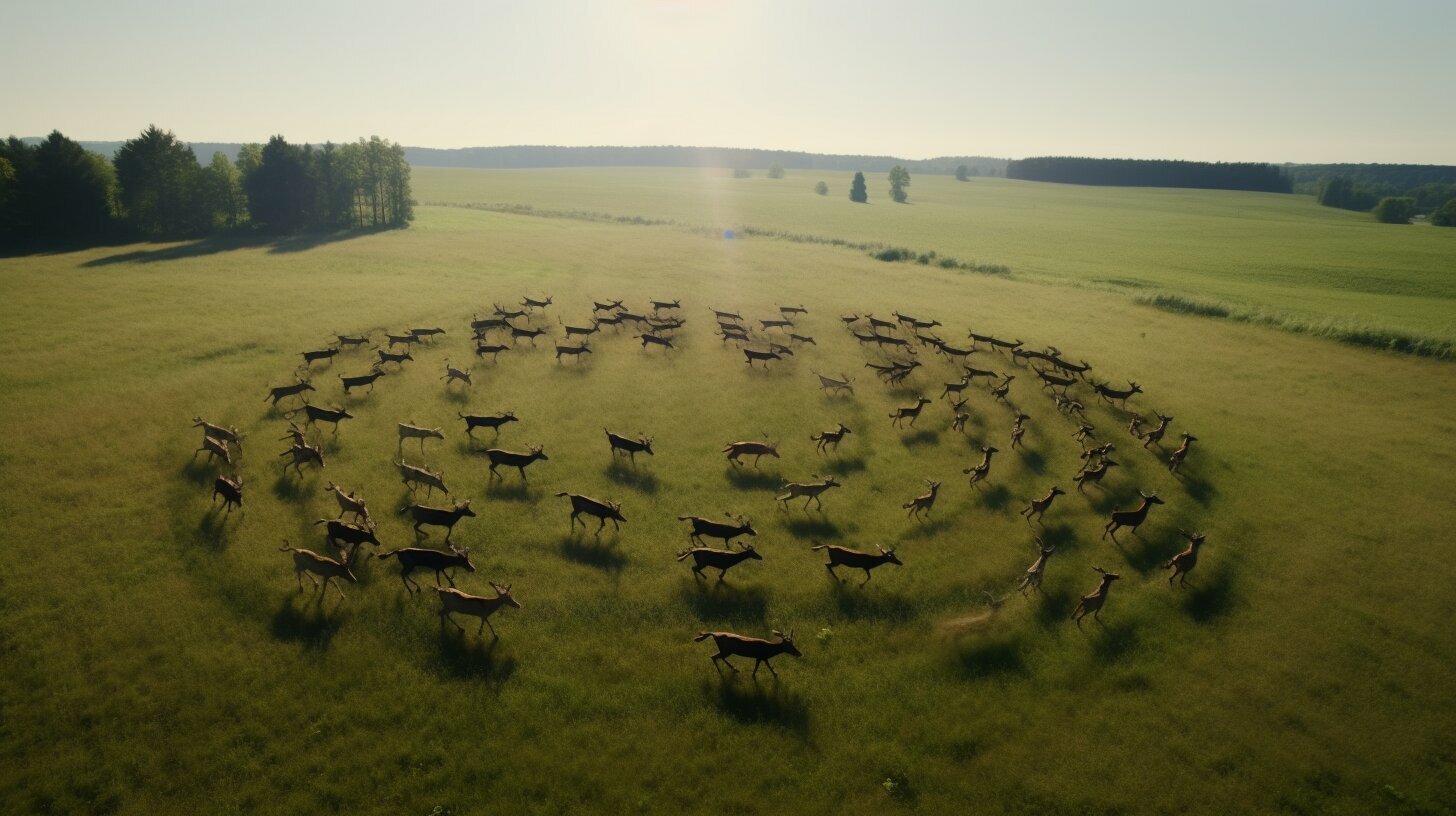
Quickly Explained: Why Do Deer Run in Circles?

Deer are known for their graceful and agile movements, but there are times when they exhibit a peculiar behavior of running in circles. This behavior has intrigued researchers and observers alike, sparking various theories and explanations. In this article, we will explore the possible reasons why deer run in circles.
Key Takeaways
- Deer may run in circles as a defense mechanism against predators.
- Running in circles enables deer to assess the situation and gather information about their surroundings.
- Deer may run in circles as a means of communication with other members of their group or herd.
- The circling behavior may also be linked to a phenomenon known as “fencing response.”
- This behavior is relatively rare and not commonly observed in the wild.
- Further research is needed to fully understand the underlying motivations behind this behavior.
Possible Defense Mechanism
One of the prevailing theories is that deer engage in circling behavior as a defense mechanism against predators. When a deer senses a potential threat, it may instinctively run away in a panic. However, instead of running straight away, it may opt to run in circles to confuse the predator or escape its pursuit. By continuously changing direction and creating a maze-like pattern, the deer aims to make it difficult for the predator to predict its movements and ultimately catch it.
This circular movement may also help the deer maintain a safe distance from the predator. Running in circles allows the deer to keep the predator at bay, preventing it from getting too close and increasing the chances of escape. This behavior has also been observed in other animal species, such as rabbits and hares, who similarly use circular movements as a defense mechanism.
It is important to note that not all deer exhibit this behavior when threatened, and it is more commonly seen in younger or more vulnerable deer. The circling behavior may also be influenced by the deer’s previous experiences with predators, as well as its age, sex, and physical condition.
Overall, the theory that deer run in circles as a defense mechanism against predators offers a plausible explanation for this behavior. However, further research is needed to fully understand the underlying motivations behind this and other deer behaviors.
Assessing the Situation
Another possibility is that running in circles enables deer to assess the situation and gather information about their surroundings. By circling around, they can observe the predator’s behavior or identify any potential escape routes. Deer instincts are honed to identify potential threats and evaluate their surroundings to make informed decisions. Running in circles may be a way for deer to survey an area and weigh the options for escape.
Wildlife behavior is complex and often difficult to understand. There may be subtle cues and signals that we are not yet aware of that contribute to the behavior of deer running in circles. Nevertheless, this behavior underscores the need for a deeper understanding of animal behavior in general.
Further research into animal behavior can help us understand not just this unique behavior of deer but also other wildlife behavior that remains a mystery. We need to explore the different possibilities and theories surrounding this behavior and determine the factors that contribute to it.
It’s also important to acknowledge that other factors may contribute to deer running in circles, such as environmental and individual factors. For instance, deer that have had prior experiences with predators may be more likely to engage in circling behavior than those that have not. While we may never fully understand all the nuances of animal behavior, continued research and observation can shed light on the different factors that contribute to it.
Communication with Other Deer
Furthermore, deer may run in circles as a means of communication with other members of their group or herd. This behavior may be a way of alerting other deer to potential danger or signaling that it is time to move on. By observing a deer running in circles, other members of the group may be able to sense the urgency of the situation and quickly follow suit.
Studies have shown that deer are highly attuned to visual cues and rely heavily on body language and gestures to communicate with one another. Running in circles may be a particularly effective way of conveying a sense of urgency, as the darting, unpredictable movements of the deer are likely to catch the attention of other members of the group.
It is also possible that running in circles may be a way of establishing dominance or asserting social hierarchies within a group of deer. By running in a circular pattern around another deer, an individual may signal its strength and agility, effectively asserting its position as a leader within the group.
Regardless of the precise motivations behind this behavior, it is clear that running in circles is a fascinating and unusual aspect of deer behavior that warrants further study and exploration.
Possible Physiological Response: Fencing Response
The circling behavior may also be linked to a phenomenon known as “fencing response.” When deer become stressed or frightened, they may enter a state of temporary shock, causing their muscles to stiffen. As a result, they may run in circles involuntarily. This response is believed to be a form of defense mechanism that helps deer cope with stressful situations.
The fencing response is not unique to deer and has been observed in various animal species, including humans. It is characterized by the animal assuming a rigid posture, with its legs and neck stiffened and tail straightened. The name “fencing response” is derived from the similarity of the posture to that of a fencer at the end of a match.
Although the fencing response is a natural and instinctive reaction, it can also be an indication of serious trauma or injury. In some cases, a deer may exhibit the fencing response as a result of a close encounter with a predator or being hit by a vehicle. This can lead to further injuries or make the deer more vulnerable to attacks.
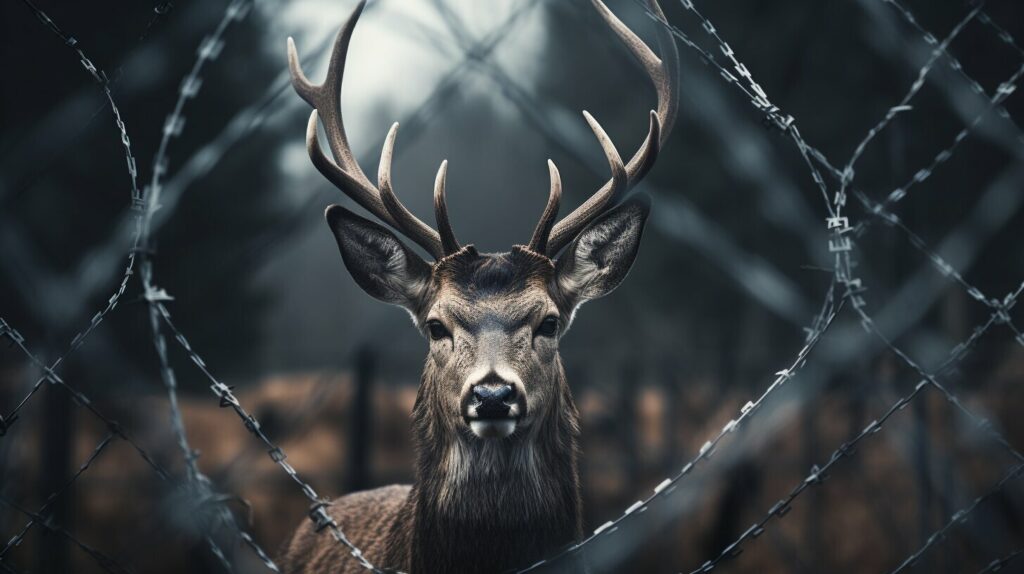
It is important to note that not all instances of deer running in circles are due to the fencing response. Factors such as age, sex, and previous experiences may all play a role in determining whether a deer exhibits this behavior. Additionally, this behavior is more commonly observed in captive or domesticated deer rather than their wild counterparts.
In conclusion, fencing response can be a possible reason why deer run in circles. This phenomenon, though instinctive, can be an indication of stress or injury and can make deer more vulnerable to attacks. Further research is needed to fully understand the role of fencing response in deer behavior.
Conclusion: Why Do Deer Run in Circles?
In conclusion, deer running in circles is a behavior that can be attributed to various factors. This behavior has intrigued researchers and observers alike, sparking various theories and explanations. One theory is that deer engage in circling behavior as a defense mechanism against predators. Another possibility is that running in circles enables deer to assess the situation and gather information about their surroundings. Deer may also run in circles as a means of communication with other members of their group or herd. Additionally, the circling behavior may be linked to a phenomenon known as “fencing response” where the deer exhibits involuntary running in circles when it is stressed or frightened.
While the reasons behind deer running in circles are not entirely understood, it is important to note that this behavior is relatively rare and not commonly observed. It is also more commonly seen in captive or domesticated deer rather than their wild counterparts. Factors such as age, sex, and previous experiences may influence a deer’s likelihood of exhibiting this behavior.
To fully understand the underlying motivations behind this behavior, further research is needed. With more research, we can obtain a better understanding of deer behavior and gain insight into the ways they interact with their environment and other animals. Ultimately, this knowledge will help us to better protect and conserve our wildlife.
FAQ
Q: Why do deer run in circles?
A: Deer may run in circles as a defense mechanism against predators, to assess the situation and gather information, as a form of communication with other deer, or as a physiological response to stress.
Q: Is running in circles a common behavior for deer?
A: No, running in circles is relatively rare and not commonly observed in wild deer. It is more commonly seen in captive or domesticated deer.
Q: Do factors like age, sex, or previous experiences influence a deer’s likelihood of running in circles?
A: Yes, factors such as age, sex, and previous experiences may influence a deer’s likelihood of exhibiting this behavior.